Updated On December 30th, 2025
top10.desc
| Rank | Product Name | Score | |
|---|---|---|---|
| 1 |
|
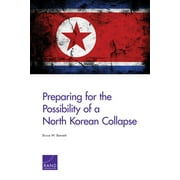
Preparing for the Possibility of a North Korean Collapse (Paperback)
Check Price
|
0%
|
| 2 |
|
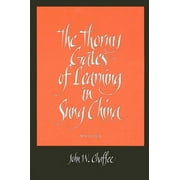
The Thorny Gates of Learning in Sung China (Paperback)
Check Price
|
0%
|
| 3 |
|
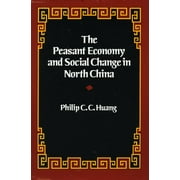
The Peasant Economy and Social Change in North China (Paperback)
Check Price
|
0%
|
Our Score
A North Korean government collapse would have serious consequences, including a potential humanitarian disaster and civil war. The Republic of Korea and its U.S. ally will almost certainly have to intervene, but are ill-prepared to do so.
A North Korean government collapse would have serious consequences, including a humanitarian disaster and civil war. The Republic of Korea and the United States can help mitigate the consequences, seeking unification by being prepared to deliver humanitarian aid in the North, stop conflict, demilitarize the North Korean military over time, secure and eliminate North Korean weapons of mass destruction, and manage Chinese intervention.
Our Score
This book explores the profound cultural impact of the civil service examinations during the period when they first became the primary means of government recruitment.
The Thorny Gates of Learning in Sung China (Paperback)
Our Score
The author presents a convincing new interpretation of the origins and nature of the agrarian crisis that gripped the North China Plain in the two centuries before the Revolution. His extensive research included eighteenth-century homicide case records, a nineteenth-century country government archive, large quantities of 1930's Japanese ethnographic materials, and his own field studies in 1980. Through a comparison of the histories of small family farms and larger scale managerial farms, the author documents and illustrates the long-term trends of agricultural commercialization, social stratification, and mounting population pressure in the peasant economy. He shows how those changes, in the absence of dynamic economic growth, combined over the course of several centuries to produce a majority, not simply of land-short peasants or of exploited tenants and agricultural laborers, but of poor peasants who required both family farming and agricultural wage income to survive. This interlocking of family farming with wage labor furnished a large supply of cheap labor, which in turn acted as a powerful brake of capital accumulation in the economy. The formation of such a poor peasantry ultimately altered both the nature of village communities and their relations with the elites and the state, creating tensions that led in the end to revolution.
The author presents a convincing new interpretation of the origins and nature of the agrarian crisis that gripped the North China Plain in the two centuries before the Revolution. His extensive research included eighteenth-century homicide case records, a nineteenth-century country government archive, large quantities of 1930's Japanese ethnographic materials, and his own field studies in 1980. Through a comparison of the histories of small family farms and larger scale managerial farms, the author documents and illustrates the long-term trends of agricultural commercialization, social stratification, and mounting population pressure in the peasant economy. He shows how those changes, in the absence of dynamic economic growth, combined over the course of several centuries to produce a majority, not simply of land-short peasants or of exploited tenants and agricultural laborers, but of poor peasants who required both family farming and agricultural wage income to survive. This interlocking of family farming with wage labor furnished a large supply of cheap labor, which in turn acted as a powerful brake of capital accumulation in the economy. The formation of such a poor peasantry ultimately altered both the nature of village communities and their relations with the elites and the state, creating tensions that led in the end to revolution.

 日本
日本 US
US